Oct 14, 2009 | Stories, Top Ten Lists
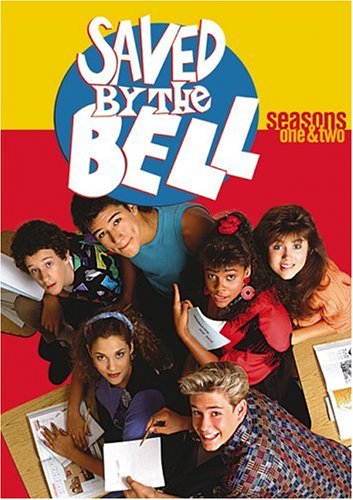 Top of the week to you! Welcome to the new website! There’s still some work to be done to make it a bit more pretty and tidy, but I hope you will enjoy it as is in the meantime! Here’s a Fresh Top Ten for the Inaugural Post on the New Site. Hope you enjoy!
For the last year of our time in Scotland, Mark and I almost altogether avoided TV, except for downloading episodes of Lost, and buying a season or two of an old show at Cash Converters. To be honest, it was a really life-giving situation, although sometimes I still wanted to ‘veg out’ in front of the TV…I felt like things were just so much better when we weren’t watching so much TV.
I once calculated the amount of time I spent watching a particular show in my childhood – Saved by the Bell. I remember that it came on twice on two different stations, meaning I watched two hours of a show I’d already seen every episode of, pretty much every day after school. I watched that same show for ages and ages – I’m totally confident for at least four, possibly five years straight, two hours a day during the school year. I did the math to discover that I wasted at the very least sixty days of my life – and if you think about it, since you’re not actually awake all the time, it was really a waste of even more time in terms of waking hours. I am certain I wasted an excess of TWO MONTHS of my life…on just one TV show! I want those hours back, Screech!
The list of good things we could probably accomplish – spending time with our children, loving our family, exercising…etc., is probably a few miles long, but for starters, here’s a crack at my Top Ten Reasons to Stop Watching So Much TV.
- 10. Advertising works! Companies spend millions and billions of dollars on advertising every year because it actually works! The less TV you watch, the less commercials you will see that will make you feel like there’s one more thing you can’t live without. (If you do what we do – buy old seasons of shows, or download episodes, you can avoid commercials altogether and still enjoy the show in your own timing).
- 9. It will probably improve your health – if nothing else than just for the simple fact that you might go to bed earlier and get more sleep! Early to bed, early to rise, might remove those dark circles from under your eyes!
- 8. You might dramatically decrease your selfishness, and your flair for the dramatic. I mean, what good role models are you watching on TV. Life imitates art. Do you seriously want to model yourself after the Desperate Housewives?
- 7. It’s very likely to improve your self esteem and self image if you stop letting the TV tell you what you should look like, and what you need to buy to have less frizzy hair, whiter teeth and a six-pack.
- 6. Be more productive with good stuff! You can spend time with people you care about, doing something useful. You can organise your sock drawer…you can play with your kids…the options are unlimited!
- 5. Read a book! There’s a lot to be said for curling up with a classic. You’ll probably learn something, and you probably won’t feel like you need to be a better consumer at the end.
- 4. You could cancel your TV subscription altogether, and save money for a holiday – or just save the money. This is a recession, right?
- 3. You can get outside more. Yeah baby! Start living and stop watching other people live for you!
- 2. Spend some of your former TV time reading a good blog or two! I have a couple of recommendations… 😉
- 1. If you’re a Christian, you can spend the time you would’ve lost watching TV with an awesome and Almighty God. You won’t feel the need to go shopping afterwards…you’ll be reminded of all the things you have to be thankful for…and you will find joy you will never find while hanging out with the crew from Grey’s Anatomy. Yay!
So, that’s your TV-Stopping Top Ten! I hope you enjoyed it, you’ll leave some feedback, and you’ll get out there and do something that makes you feel alive today. But if it’s anything dangerous, don’t hold me responsible or the consequences. xC
Oct 9, 2009 | Stories, The Good Word
One of my professors at the University of Edinburgh talked a lot about the significance of the narrative of the salmon. He thought it was sad that farm-raised salmon never get the chance to experience the narrative of the wild salmon — the true story of their destiny. Whether or not you would like to call it a narrative, the story of the salmon is really cool. There is actually a spot in Scotland where you can see them jumping up a waterfall and trying to make it upstream to spawn. While the story might be a complete nightmare if you have a lisp…it’s still a great stowy! You see, while most fish tend to go with the flow, the salmon start making their move upriver in the fall of the year, and when they feel they’ve found a good spot, they’ll lay their eggs. Often, they’ve gotten themselves so far upstream that by the time they’ve finished spawning, they’re in a high eddy where they can’t exactly get back downstream again. So they die there, but as their bodies decompose, they make the water extra-nourishing for the little eggy salmon waiting to be hatched. Their eggs are (hopefully mostly) safely kept there until it’s time to hatch, when they instinctively will begin the journey downstream to some more spacious waters, and the cycle will start over again.
There’s a beautiful spot at the Hermitage in Dunkeld where you can watch the salmon jump, and Mark took me there once a few years ago. It was amazing to see the fish trying to make it up this gushing waterfall, where they would honestly have to do a triple jump to make it to the top. Â I don’t think I ever saw one make it, but it was really entertaining to watch them try! Ooooh he almost made it! Ouch that one just faceplanted into a rock! But the fact that they have that amazing story, which as far as I know is unlike any other, makes them unique and special, and maybe even extra tasty.
The story of the Woman at the Well is similar — and yesterday’s blog (heck, a thousand blogs) couldn’t fully cover it. Something else that was really significant about the story was that Jesus was totally swimming upstream throughout His interactions with the Samaritan woman. In His day, it was not common for Jews to speak to Samaritans — they didn’t even want to go near them. Instead of treating the Samaritans like fellow human beings, they treated them like the red-headed stepchildren of the faith — they thought they needed to be treated like rubbish and totally ostracized. The Jews and Samaritans were constantly squabbling and bickering. Many a Jew in Jesus’ day would rather die of thirst than ask a Samaritan … especially a woman .. and one of questionable character at that, to draw a drink of water.
There’s probably not a lot to be surprised about in her response — “Um…like…aren’t you a Jew? So…ugh…why are you asking me for water? You guys don’t normally even want to be seen on the same hillside as us.” Jesus told her that if she knew with whom she was speaking, she would be asking Him for a drink of living water. She liked that idea, until Jesus suggested that she bring her husband and come back. She tries to skirt her ‘issues’ by simply saying she doesn’t have a husband. Jesus reads her mail and says, “Yeah…you’ve already had five, and you’re not even married to the guy you’re with now.”
Instead of outright telling Jesus to get our of her sauce, she just changes the subject, by bringing up part of the argument that has been going on between the Jews and Samaritans for ages. But once again, Jesus is not caught up in the cultural dilemmas of the day. Here’s how Matthew Henry puts it:
Jesus did not try to convince her of her schismatical belief system’s faults, but her conversion came about because He showed her her own ignorance and immoralities, and her need of a Saviour.
Although there are a thousand sermons to be preached on this simple interaction, here’s the place I’m headed: Jesus was not caught up in the cultural customs of His day. And that meant He was free to engage anyone He wanted, anywhere He wanted — Jew or Samaritan, Mute or Leper, Tax Collector or Prostitute. What does that say for us? It says to me — pay attention to where the customs of your culture might take you. Those customs might lead you in a different direction, and on a different path from the one the Lord would have you take. Has your culture made you think the best place for a woman is in the home? Has your culture made you believe that people of a different ethnicity are incapable or intellectually inferior? Have the common customs of your locale made you think there are places you shouldn’t go or people you shouldn’t help? And more significant, has your culture perhaps convinced you that you don’t actually have to make Jesus your Lord, and you can still call yourself a Christian?
We should constantly challenge our ways of thinking in light of the Truth of the Gospel. The Truth is, we could perhaps consider ourselves salmon. And our true destiny is to live, contrary to our nature, in the call of God. Our true destiny is to swim upstream, and live, not according to our sinful nature, but according to the leading of the Holy Spirit, in obedience to God. And a life lived to God is a life lived upstream. If you are living in obedience to God, it is not likely that you will be doing the same thing as everyone around you. It is likely that the walk God has for you will be more of a challenge than a lazy afternoon ride on a raft headed with the current of the little stream He’s placed you in.
The cross is a heavy object. Carrying it is likely to bring you to places of resistance — places where it is difficult to lift this heavy object and bring it with you — places where it would be easier to turn back, to put it down, or to keep walking without it. Â If you should decide to put it down, to go with the current, and to keep on as you always were, you might still be swimming, but you’ll be swimming in nets on the farm…and you’ll never brave the open waters to live out the story God has for you.
Take an opportunity to swim upstream today. And please let me know how it goes.
Oct 8, 2009 | South Africa, Stories, The Good Word
Mark and I were out at a restaurant the other morning (the one where I paid a whole dollar for honey with my tea) to read our Bibles and have a cup of tea. When the waitress came back with the tea and we’d pulled out our Bible, she asked what the Word was today and for us to teach her something from the Word. Mark smiled and asked if she was a Christian, and she said (with some sense of uncertainty) “I believe that I am.” It was an interesting answer and I’m not sure whether she was simply being humble in calling herself a Christian or whether she was actually uncertain of whether or not she was a Christian.
After she walked away, we talked about it for a little bit, and got into the Word for ourselves for a while. We talked about the Transfiguration described in Mark 9 — why it happened, and why Jesus chose those three disciples to be the ones to see it. At the same time, the waitress’s answer to our question was in the back of my mind and each time she came back to check on us, I looked for an opportunity to engage her in further conversation about it. She was gone before I knew she was there each time, and finally when we were about to leave and she’d brought the bill (with my dollar honey on it!) she asked what the Word for today was.
I’d begun writing a few Scriptures down on some slips of paper I had in my purse to encourage her about her faith, and so we told her I was busy writing it down for her, and we would have it for her when we had the bill. I chose a couple of simple verses about being a Christian, about hearing and doing the Word, about confessing and believing, and just wrote a simple encouragement along with them. She thanked us and took the check while I nipped to the loo quickly before we left.
While I was away, Mark listened to one of the other customers chatting with the waitress nearby. The customer was explaining to the waitress all the benefits of drinking soda water — how good soda water is for your skin and your health, how it will give you a longer life, and so on. After I returned and we were leaving the restaurant, the waitress came up quickly and joyfully and said, “I do believe!” And we both said, “That’s great! That’s really great!” And we were on our way.
What was so interesting was the juxtaposition of interactions this sweet girl had had over the course of her morning. There are so many people who believe they have the ‘keys to life’ and will give you advice about how to enjoy a better life, how to find health, wealth and happiness. But this life is so fleeting — so many of these recommendations will make no difference when this life is through.
When Jesus spoke with the woman at the well in John 4, He offered her water which meant she would never thirst again. We had the opportunity to encourage the waitress about that water, the eternal life and salvation that we have in Jesus. As we walked away and Mark shared with me what had happened, we marveled at the difference between what the world wants to tell you about how to have a great life, and the true promises that are only found in the abundant life of a person who walks with Jesus.
The Sermon in a Nutshell: This world is filled with promises — and other people will gladly tell you how to live your life if you let them. But I’m confident that abundance, joy, contentment and peace are found in Jesus and nowhere else. If you receive His living water, that is, if you receive the gift that is Jesus, and His Holy Spirit, it will satisfy your soul — and you will begin to realise that the things the world wants to offer you are altogether a worthless lot of rubbish compared to the glorious riches available to you in Christ. If you’re thirsty, that’s the best water you can find!
xCC
Oct 7, 2009 | South Africa, Stories, Top Ten Lists
Top of the Week to ya! Since lots of folks seemed interested in my last post about South Africa, I decided to write another SA post…perhaps for those of you planning to be here for the World Cup next year! This amazing country is a melting pot of cultures, languages and of course, some delightful idiomatic expressions…which are my favourite things to learn, in any language. If you’ll be here for a visit anytime soon, here is my guess at the top ten most important words for you to learn, which might not be native to your version of English. Now mind you, I am not a South African, but married one, so I must give the disclaimer of saying these are second-hand understandings, with some first-hand opinions added in.
If you want to speak South African, this is a good place to start:
10. Robot – you might picture a metal box of arms and legs that can dance or run the Hoover for you (a la Rosie on the Jetsons), but in South Africa, a robot is a traffic light.
9. Gatvol – Pronounced HUT-vul, when you’ve “had it up to here” or are past the point of being incredibly frustrated, you are “gatvol.” Eish, by the end of that rugby match, I was gatvol with the Cheetahs. Maybe next season, hey?
8. Bro or bru – An abbreviated term for brother which rhymes with “row” or “chew.” Hey bru, it was a lekker party last night.
7. Eish – This term sounds like ‘ace’ with an ‘h’ on the end. It means ‘wow.’ It’s sometimes used in sticky situations:Â Eish, bru, I’m sorry. I didn’t even know it was your birthday.
6. Eina – Ouch! Or when something is sore. This is a long ‘a’ sound, followed by a ‘nah’. Might be used instead of a southern ‘dern’ when one stumps one’s toe.
5. Jislaaik – This one is pronounced “Yis-like” and means “gee” or “wow.” It’s a useful exclamation for when something is surprising. Jislaaik, those are tight jeans. She must’ve jumped into them from the top of the cupboard.
4. Boerewors – This tasty treat is literally translated from Afrikaans, farmer’s sausage, ‘Boere’ meaning farmers, and ‘wors,’ sausage. It’s pronounced (at my best attempt) “boo-re-vors” with a bit of a trill on the first r. It should be comprised of mostly minced beef, and is sometimes mixed with a bit of pork or lamb. No braai is complete without it! (See Number One).
3. Howzit? This lovely and useful term is simply “How’s it going?” but nicely abbreviated. You can imagine it like a South African Joey from Friends saying, “Howzit, Rachel?”
2. Lekker – You can’t visit South Africa and not hear this term a few times. If something is lekker, it’s nice or good, depending on the context. (Lekker is pronounced kind of like ‘lacquer’ as in the stuff you might coat wood with.) Eish, it was a lekker party until she showed up in her tight jeans. Then we were gatvol and left.
1. Braai — rhyming with “try,” this is perhaps the most important word in the South African English Language. It’s both a noun and a verb. You might call it a barbecue, or “grilling out.” The pastime of the braai is an incredible art — many South Africans are choosy about what type of wood they use, others might use charcoal or briquettes or (less often I suppose) a gas braai. The timing of putting on the meat, the heat and size of the fire, and the amount of wind you might be dealing with are all factors to consider which can make or break the perfect braai. And from my experience so far, a true South African will always say the braai they’re enjoying could’ve been just a little better if they’d just …
I highly suggest coming to South Africa for the World Cup next year, or just for a visit any time! So howzit, bru? Come enjoy some bakgat boerewors at a lekker braai or two! You’ll pass through a few robots, and be here just now, hey? Eish, the trip might be eina, but you’ll be gatvol if you don’t.
Here are a few extra tips for good measure:
- Avie is slang for afternoon, pronounced “AH-vee”
- Bakgat -Â this is an Afrikaans word used fairly often by English speakers. Pronounced “BAHK-hut” with a nice thick ‘hhh’ on the hut. Bakgat means ‘fantastic.’
- Lots of folks, especially from Johannesburg (also known as Jozi or Joburg), will end their sentences with “hey?” Warning: this can rub off on you VERY quickly. (I picked up this habit when I lived in Scotland and had a roommate from Southern Africa!)
- Ja – pronounced “Yah” is a common way of saying yes, and people will often start or finish sentences with it.
- Alternatively, people more often begin their sentences with “No…” in answer to a question, even if “no” isn’t actually the answer to the question, and even if the question is not a yes or no question. So keep listening until you get the whole answer!
- If you’re teasing the person in the centre by not giving them the ball, you’re playing “piggy” (not monkey) in the middle.
Here’s another great site where you can learn to “speak South African” in preparation for your visit!
xCC
Oct 5, 2009 | South Africa, Stories
One of the biggest challenges I’ve found when trying to get settled in a new country (based on two experiences now) is trying to understand the value of the local currency. I was reminded this morning when Mark and I went out for a cup of coffee. We ordered a couple of pots of Rooibos tea (which I was amazed to see has now been introduced at Starbucks in America! Weird reverse culture shock moment to see Rooibos tea in America and say, “What are you doing here?”) Anyway, I wanted honey with my tea and so requested it. The waitress made an apologetic face, and said it would be 6 Rand. Because I’m not exactly aware of the value of currency yet, and was thinking something like, “50 cents” in my head, I said, “Sure that’s fine.”
Of course, as it happens, after she was halfway across the restaurant, the conversion actually sunk in and I realised what I’d just done and looked at Mark and said, “That’s like a dollar!” And I was totally offended to be paying (basically) a whole dollar for a tiny bit of honey to go with my tea. I wanted to go back and say “Nevermind, nevermind, I’m not paying a dollar for honey! I’ll have sugar!” Mark said, “That’s okay, we’re still learning” and told me not to worry about it. Shocking!
I think the really difficult thing, is not just learning to convert the currency you’re working in to an amount you understand. The challenge is actually learning the value of the currency you’re working in. Although 7.5 Rand = 1 USD in terms of currency conversation today, I think I can buy more with 7.5 rand in South Africa than I can with 1 dollar in the US. And of course certain items are going to be more expensive in one country, for example if they’re manufactured there, than they will be in another. We were looking at camping chairs for our balcony today. Is 120 Rand a good price for a camping/tailgating chair? I think $16 would be a great price for one, but around here it sounds like I should be able to find one for even less.
Buying food is an even greater challenge. Walking into the Pick n Pay is such a daunting prospect that I almost dread making a shopping list and preparing for the journey. The cheap and tasty meals I used to do in Edinburgh are suddenly not the cheap and tasty options here. I grapple with these types of dilemmas at the moment:Â Why is spicy cooked sausage so stinking expensive, suddenly? Â How will I do my cheap and cheerful stir fry without it? The other day I spent ages staring into the butter section looking at choice after choice and examining prices and sizes. Asher was tired of being in the grocery cart, and my brain was fried. Finally, a very healthy-sized Mama came along and stared into the case for a moment before choosing her butter, and I thought, “Well she looks like she knows what she’s doing” so I chose the same one and was on my way!
So the adventure continues, even when it’s just an adventure to the grocery store to figure out what’s for dinner. If you have any tips on the value of the South African Rand for me, they are most welcome. 🙂
xCC
Oct 3, 2009 | Stories, The Good Word
I really, really enjoy the band U2. Are you a fan? One of their songs came on the radio once, and I said to my sweet friend Shelley, “I love U2.†And she said, “Aw, I love you, too.†Seriously. That was funny. One really cool song on their How to Dismantle an Atomic Bomb album is called Crumbs from Your Table. And one of the most powerful lyrics comes from the chorus: “You speak…in signs and wonders. But I need something other. I would believe, if I was able, but I’m waiting on the crumbs, from your table.â€
If I could hazard a guess, since the musicians in U2 are fairly faith-filled guys, they are speaking about a very cool story that is recorded in Matthew 15, and in Mark 7. I promised yesterday I’d talk about the woman whose faith was proved and improved, and this is her story. She was a Syro-Phonecian, in case you were wondering, and her daughter was demon-possessed. Okay before I lose you, tune in the story gets better.
I guess when Jesus showed up on the scene miraculously healing people and speaking with all this power and authority, word kinda got around and people started taking notice. This woman from Canaan was one of those folks who took notice, and when she heard Jesus was going to be around, she was on the first camel headed in his direction. When her camel finally got there, she came to Jesus with a fairly simple request. My daughter is sick, and from what I’ve been hearing, you are able to make her better. Would you please? It reminds me of this little mouse in Asher’s Jungle Babies book. Tangent! The little mouse is the last little creature in the Jungle Babies book, and he says, “I’m a Jungle Mouse. I like to eat cheese. If you have some, could I have it please.†I think it’s kind of forward for the mouse to just ask for my cheese if I have any, but I guess he likes it, and he’s saying please so, yeah, if I had some, I’d probably give it to him. He’s a cute mouse after all.
But back to Jesus. This sweet little S-P lady shows up all gentle, humbly honouring Jesus and, perhaps like the Jungle Baby Mouse, says, “If you do that, could you for me please?†I’m sure you’re expecting the next line to be, and so Jesus did, the end and they all lived happily ever after till the end of their days. But I’m afraid it’s not so!
Jesus didn’t even say, “Ugh…no.†At first He didn’t even answer her! But she kept bothering him and His disciples got really bovvered and said, “Well heck, if you’re not gonna help her at least tell her to ske-daddle!†And Jesus said, “I was not sent except to the lost sheep of the house of Israel.â€
But she persisted and kept worshiping and saying, “You have cheese and I love cheese, please please please!†Well not exactly but you get the idea. And then Jesus said, (and I’m not making this up, this is actually in the text) “It is not good to take the children’s bread and throw it to the little dogs.â€Â To which she replied (seriously) “Yes, Lord, yet even the little dogs eat the crumbs which fall from their masters’ table.†And Jesus answered and said to her, (back to me paraphrasing) “Wow! You have really, really great faith! Let this thing you’re hoping for happen for you just like you hope it will.†And her daughter was healed right then.
It seems like Jesus was being harsh with this woman. He was sent first to the lost sheep of Israel, but did he have to be so abrupt about it? In actual fact, Jesus actually proved and improved her faith over the course of this conversation. She believed Jesus was good. She believed He was able to do what she hoped He could. And even when it appeared on the surface that He might not be so good to her, she pressed on, and continued believing He was good. The text says she worshiped Him even more after He said no. I wonder how often some of us might receive the things we are believing God for if we would press in — if we would not give up and lose heart because on the surface things are not looking so good. Her perseverance paved the way for an incredible miracle, and for her story to be spoken of for centuries to come. Her faith has been spoken of ever since this incident occurred. And she received what she believed she would — she went home to a daughter, well and whole.
If you don’t believe that Jesus was who He said He was, you might be asking for a sign — for God to show up with some sign, like some magic trick that would confirm your faith. If you want someone to just prove to you that He’s real, or explain how bad things happen if God’s good, you are probably waiting on crumbs from God’s table. You could be enjoying the meal that’s on the table — the full feast of the goodness of God, but you are asking for crumbs before you’ll believe. If you’ve made it far enough into this blog to still be reading at this point, and you aren’t already following Jesus, I’d like to issue you a challenge.
The Good News is God has more than crumbs for you — He has a life of faith for you, greater than any magic trick, or sign or wonder. And if you diligently seek Him, He will reward you for it. That doesn’t mean you’re going to be able to levitate heavy objects or bend a spoon with your mind. But it does mean you can find peace, joy, and wholeness in the presence of God. The Bad News is, whether you want to admit it or not, you are a sinner. You have done things wrong, and you’ve offended a Holy God. Although your personal belief may be that God doesn’t exist, take a second to consider the possibility that you’re wrong, and the possibility that your incorrect presupposition could have eternal ramifications. We are all sinners in need of a Saviour, and there’s only One who paid the price for our forgiveness. If you diligently seek Him, you will find Him. And He’ll have more than crumbs at the table for you when you show up.
xCC

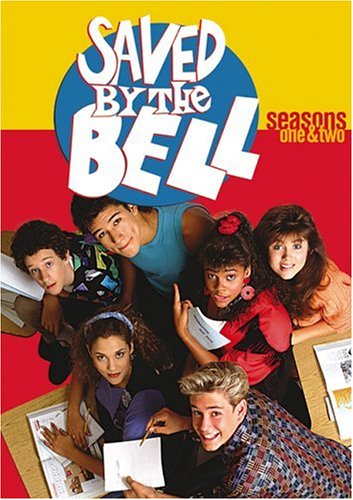 Top of the week to you! Welcome to the new website! There’s still some work to be done to make it a bit more pretty and tidy, but I hope you will enjoy it as is in the meantime! Here’s a Fresh Top Ten for the Inaugural Post on the New Site. Hope you enjoy!
 I create resources to help people find deeper, more meaningful relationships with God through pursuing, pondering, and prayer. The "Shop" link above will take you to the home of many of the lovely resources I’ve created to help you keep walking one day deeper with Jesus.